
Ultra-High-Performing Teams facing the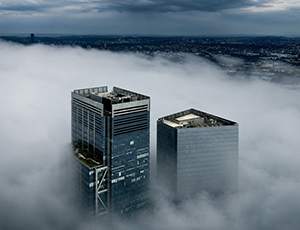
Test of Progress
Progress is often seen as evidence of a team’s success. However, this very progress presents challenge over time.
As leaders are promoted and new leaders emerge, expectations continue to rise and evolve. What was effective in the past may no longer suffice.
Last week in New York, I worked with two high-performing leadership teams that are currently facing this very challenge.
My latest article explores what it takes for an Ultra-High-Performing Team not only to achieve success but also to continuously rebuild itself as progress leads to leadership transition, disruption, and elevated standards.Last week, in a corner room overlooking the Statue of Liberty and Manhattan, I worked with two leadership teams. They were high-performing already and we set the bar higher.
We aim to make them Ultra High Performing Teams. Best in the company. Best in the industry.
Last year, I wrote that Ultra-High-Performing Teams are built, not found. I have linked that earlier article in the first comment. I also predicted that, when they truly work, they breathe upward potential and generate pull from the top. Their leaders grow, become visible and move into larger roles. Opportunities emerge everywhere, together with greater challenge and inevitable hardship. Progress creates its own test.
These two teams are now living through exactly that transition.
When success creates disruption
Their original leaders had been promoted. Their team and individual success had created progress, and progress had created disruption. New leaders stepped into big shoes, not aiming merely to preserve what was, but to develop new ways of working and expand the group of people carrying the spirit of high performance in service of the organisation and its clients.
Simple does not mean easy
We did what looks simple to the untrained eye: introducing ourselves, properly. Understanding trigger points, observing behaviours and evaluating what happened. Practising intentional management. Discussing our baseline assessments showing how we talk, how we work and how we act under pressure. Simple does not mean easy.
When teams come to life
Participants were invited, and truly allowed, to be themselves. There were tears. Adult learning starts, and teams come to life, when PPPM, Perfectly Polite and Perfectly Meaningless exchanges, give way to IPP, Interesting, Personal and Provocative conversations, challenging people emotionally and intellectually before real hardship tests them. By the time that challenge arrives, it is too late to discover that colleagues barely know one another or have never practised being honest with themselves and each other.
Each early morning, during my run past the Brooklyn and Manhattan Bridges, I reflected on the angle for the day: where to challenge, where to hold back and how to create enough safety for openness without allowing comfort to replace honesty, within the limited time we had.
When the clouds lifted
On Thursday evening, we rose more than 380 metres above Manhattan into a thick soup of cloud, with little expectation of seeing anything at all. Then, almost theatrically, the clouds began to lift. Manhattan, the Hudson and the Statue of Liberty emerged piece by piece until the city lay before us in its full majesty. Morocco–France, interesting in itself, moved out of sight as we shared one of the best meals we had ever had, in truly unique company.
We all gave everything we had and finished with what one participant described as a “good tired”.
The test of progress
The real test of progress for an Ultra-High-Performing Team is not whether it succeeds once under one exceptional leader. It is whether it can build and sustain durable trust, accountability and the desire to fix what needs fixing. It remains resilient through shifts in direction, career progression, leadership transition and external or internal disruption. Part of its success is that it continues to raise the bar for itself and for others.
Like the city outside the window, the strongest teams do not remain successful by standing still. Progress requires them to keep rebuilding themselves.
