
Kann denn Leistung eine Sünde sein?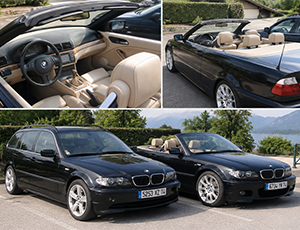
Can performance be a sin?
Switzerland should compete with the best
Two weeks ago, I attended a McKinsey conference on Switzerland’s competitive position.
My first conclusion: resilience is not enough.
In Asia, I encounter extraordinary hunger for growth. In America, an incredible appetite for performance and a willingness to step into the ring. Put a difficult job on the table, where failure will be visible, and my client says: I will take it.
And Europe?
I wonder: is Europe becoming a museum?
A beautiful one. Extraordinary cities, posh universities, fine-dining culture. Beautiful corporate headquarters overlooking lakes.
The name remains on the building. The history remains European. But the investment is happening elsewhere.
As the Roche Chairman said at the conference: we have already moved, but we are still finishing our headquarters. Everything happens with a lag.
Switzerland should not look at Europe for reassurance. Rather as a warning. The benchmark is outside Europe.
Swissness was never about comfort. Clean. On time. Available. Reliable. Precise. Hard-working.
It had to be. Our wealth does not come out of the ground or fall from the sky. We created it.
Wolfgang Reitzle ran product development at BMW through the 1990s, and is credited with the 3, 5, 7 and 8 Series generation that turned BMW into Mercedes-Benz’s genuine rival rather than its cheaper, sportier cousin.
He put the danger rather brutally:
“Wohlstand ohne Leistung ist Illusion.”
Prosperity without performance is an illusion.
Companies need to swim in the direction they choose, not just go with the flow
Before we blame Bern, Berlin or indeed Brussels, what about our companies?
Can successful companies become museums too?
Famous brands. Proud histories. Sophisticated processes protecting what generations before created.
But where is tomorrow being built?
If a fish stops swimming in a river, it does not stay where it is. It goes to the sea.
And the dangerous thing is: it still feels like movement.
The scenery changes. Distance is covered. But the fish is no longer determining where it goes.
The current is.
I see companies incredibly busy. Restructuring. Transforming. Digitalising. Optimising. Cutting costs. Exhausted managers. Disgruntled workers.
Lots of movement.
But are they still choosing where they swim?
Reitzle spoke about a “sportliches Hochleistungsklima”: ambitious goals, “positive Anspannung,” and the conviction that nothing is so good that it cannot become better.
And importantly: performance has to translate into the product.
I wonder what Reitzle thinks looking at BMW today.
A million ambient-lighting moods tire the buyer, while the iDrive controller, the wonderful piece of engineering allowing the driver to operate the car without constantly looking away from the road, is disappearing.
Physical controls become touchscreens. Sunroofs become fixed glass. Door handles dangerously disappear into the bodywork. Durable materials with great haptics make way for scratchy rubbish.
Made cheaply. Sold expensively. Decisions that may make sense on a spreadsheet – for the accountant.
But the buyer? The one who pays? And now we are surprised when the buyer looks elsewhere!
Wohlstand ohne Leistung?
Perhaps we should think laterally and learn from our own museums.
Why do people travel from around the world to savour our paintings, walk our five-hundred-year-old bridges or see the Pantheon?
Not because they are old. Because they are extraordinary.
Every stone, every line was somebody’s Leistung, done so well that centuries later it is still worth our while.
Perhaps becoming a museum is not the problem. Becoming a mediocre museum is.
The best museums do not compete on volume or cheap fanfare. They curate. They know what is worth preserving. They combine substance with a quality experience.
Culture with style.
Reitzle did not beat Mercedes by building a better Mercedes. He built the best BMW: a different game, built around performance and the feel of the drive rather than comfort and status. He chose his battle, took real risk and won it.
Europe will not beat China by copying China. China has just started its 15th Five-Year Plan, covering 2026-2030, with another deliberate push into innovation and a target of at least 7% annual growth in R&D spending.
Running after a strategy somebody else has pursued deliberately for years, while making our own investment increasingly difficult, is not a strategy.
So what is our game?
Soll denn Leistung eine Sünde sein?
Quality. Reliability. Craftsmanship. Engineering. Service. Trust. Durability.
The best there is, or nothing at all.
Imagine a Porsche sold with a Life-long Warranty®:
We made this so well that we are prepared to stand behind it.
We need to step back into the ring
Now comes the uncomfortable part.
What about us?
Early in our professional journey, we volunteer. We fall and cry a little. We learn. We take assignments we are not quite ready for.
We step into the ring. Then success comes.
Experience. Reputation. Position. Income.
Something to lose.
And almost imperceptibly, the question changes.
From:
How good could I become?
To:
How do I protect what I have?
When did I last volunteer for something where I might actually fail?
When did I last learn from somebody younger, faster or better than me?
For years, I have offered clients my own Life-long Warranty®: if what I deliver is not among the best you have experienced, do not pay me. And if you have a question about my content years later, call me.
Commercially slightly mad?
Perhaps.
But it forces me to ask every time I walk into a room:
Is this really the best I can do?
It keeps me accountable. On my toes.
High performance without sustainability eventually breaks people.
But sustainability without performance?
Comfort?
Entitlement?
Wohlstand ohne Leistung?
Countries. Companies. Individuals.
If a fish stops swimming, the current does not stop.
The fish is still moving.
But is it still going where it wants to go?
Kann denn Leistung eine Sünde sein?
Can performance really be a sin?
